

By David Finkle
Foreword
In presenting the following manuscript, I’m asking you the reader to recognize as true a series of (almost entirely) serendipitous incidents that will strain credulity to the breaking point and possibly far beyond it, as far beyond as the other side of the grave.
I ask you to take my word that what are included here are no more nor less than events experienced by myself and others over several years. The others are men who trusted me with their accounts after they had learned of mine.
(Why there are no women involved, I’m reluctant to speculate. Whether their absence indicates a difference between the sexes, I’m in no position to conclude. If pressed to conjecture, I might say that men are needy in ways different from women, but I wouldn’t stand by it. It’s just a thought.)
I have to confess that I never recorded the men’s stories as I listened attentively. I only relay them as I remember them—as accurately as possible, to be sure. They are too indelible to be forgotten. They are absolutely not the sort of unexpected happenstances I—or they—would have been able to concoct out of whole cloth. I am not convinced that anyone could, though others might deem it possible.
I readily admit that living through my experiences severely tested my credulity as the credulity of those I also report was tested by theirs. I suspect when you hear about them in as much detail as they and I are able to recount, they will test yours as well.
Indeed, they were so incredible to me even as they unfolded, for me and for those whom I speak, that I resisted passing them along in fear of exposing myself—and them—to sustained derision.
(Believe me when I confess I have never been the kind of man able to laugh easily at himself. I laugh at many things easily, but laughing at myself—I’ve had to accept belatedly—isn’t one of them.)
It was only when I reported these experiences to friends and acquaintances whose responses I accepted as genuine, and they, to a man and woman, encouraged me to publish them did I agree to commit anything to print.
Nevertheless, without further explanation, here the manuscript is for your perusal. Whether or not you believe what you read is not up to me—any more than what I maintain as occurring in the first place was, or is, a matter of my volition or those whom I represent.
I ask nothing more than your indulgence as I unfold these thirteen stories, mine the first and last among them. The first is the one that disposed me to hearing the rest and, as an inevitable result, to believing them whole-heartedly.
I also ask that, if you choose to reject what you’re about to read as a series of impossibilities in the world you know—or think you know—please withhold your scorn and simply dismiss the accounts as fantasies dreamed up in the kind of fertile mind I only wish I had.
—Paul Engler
August, 2014
Paul Engler’s Story, or Marilyn Monroe is Hamlet
It began with no advance notice as do so many things—incidents, episodes, events, developments, whatevers—in this mysterious and inexplicable life.
Not all that long ago I was walking across East Fifty-seventh Street in bustling New York City on an especially brilliant Wednesday afternoon in September. It was the kind of day that gave rise to the false-promising term “Indian summer.”
As I knew I would, I passed the chain-link-fenced-off, unmown-grass-covered vacant lot that’s what’s left of a building in which I once lived. Whenever I see it—maybe once a year now, not much more often—I feel as if I’m being unceremoniously notified that my past is in the process of being obliterated.
I probably wouldn’t mind so much if other Manhattan buildings where I’ve shelved and stacked my books and set up light (very light) housekeeping hadn’t also gone the way of the dodo bird or other species that may not be extinct but are at great risk in these unpromising ecological times. But there are two more edifices in which I dwelled, well, temporarily—one on East Sixty-third Street and one on West Seventy-eighth Street—that have also been razed in my dishonor.
What bothers me is that erasure of the five-story edifice from the East Fifty-seventh streetscape—the others as well—feels as if my recollections of what it was like to live there are also meant by a spiteful deity to be deleted.
But hey, they’re my recollections. I want to keep them.
So what always happens when I take the route(s) is that I start running through as many memories from those far-away-and-getting-farther years as I can. What follows is perhaps the most indelible memory from those days.
Just to put what’s rapidly beginning to feel like melancholia, which it isn’t, into context, I’ll say I moved into that ground-floor East Fifty-seventh Street studio apartment shortly after I stampeded to New York City to start my brilliant career. My brilliant career in what—and as what—I had only a vague idea. Of what lay ahead of me I had no idea and less idea of what was to become of me.
At the time, a friend of mine who’d already been a local resident for an impressive (to me) spell referred to my experiences as “first-year New York.” I’d tell him I’d gone here or done that, and he’d chuckle and say, “First-year New York.” I resented it, because by “first-year New York,” the querulous friend—a co-worker at my entry-level magazine-staffer job—really meant “naïve.” Worse, he really meant “naïve and cute.” I didn’t enjoy being dismissed as naïve or cute, mainly because I was naïve—and probably “cute,” too, in my way. Whatever my way was.
Today, though, the whole notion of my naiveté is one of those memories I get a kick out of retrieving. A favorite—surely the most outlandish—is the memory of the celebrated neighbors I had then and what it meant to a boy from the sticks—for me, Mount Kisco, New York was unarguably the sticks—to live in such close proximity to famous people, to live in such close proximity that I’d actually get to now them.
The neighbor who impressed me the most, however—the neighbor I most wanted to get to know so I could say I knew her and had shared a confidence or two with her—was someone who wasn’t technically a neighbor: She was dead by the time I moved in. But if I’d moved in as recently as a couple decades, even just a decade, before I did, she would have definitely been a neighbor.
I’m talking about Marilyn Monroe. When Marilyn Monroe was in the City, she lived in the next block! In the very next block! On the same side of the street, no less! That Marilyn Monroe and I, Paul Engler, could have lived a block apart but didn’t was merely bad timing.
What I thought was especially bad about it was that if we’d really lived a block apart, it would undoubtedly have been only a matter of time before we would have passed each other on the street; before we would have become nodding acquaintances and then friends; before we could have eventually become close enough so that I would have stayed her unnecessary August 4, 1962 demise.
Many people have these sorts of fantasies about prematurely deceased celebrities, but, come on, mine can’t be dismissed so readily—no matter how naive or cute I was. Dreamers separated from her by thousands of miles might have been kidding themselves, but not someone twenty-two, understanding and outrageously compassionate like me who lived nearby and whose head and body weren’t stuffed with booze, drugs and weird Hollywood notions.
So there you have it. The inevitability of my saving Marilyn Monroe but for a lousy chronological discrepancy of a decade or two is one of the most indelible memories of my East Fifty-Seventh Street life and what I wanted from it.
And yet, one inclement October Saturday when I’d only occupied the 330 East Fifty-seventh Street ground-floor studio apartment for three or four months, I was running a few errands when a sudden squall caught me. But not entirely by surprise. I had my handy-dandy collapsible umbrella with me. So what did I care?
That’s when, with the suddenness of the downpour, my reverie was interrupted by the sight of a short woman standing forlornly under a canopy in a nondescript raincoat with a kerchief tied under her chin. To me in that moment, she was just a woman stuck wet and clammy in the rain. As I reached her, I shot a pitying glance. She returned the gaze from a pair of very big and wide eyes, eyes that seemed to say, “Protect me, protect me, you handsome, tall and protective stranger. Protect me. Take care of me.”
At least that’s how I saw those amazing peepers as I barreled along in my quasi-romantic memory-stupor nd totally unaware of the memory I was about to add.
By the way, I knew the look was meant for me alone, because the shower had sent many would-be pedestrians into doorways and under canopies. There was no one else passing. I also had the unshakable feeling I’d seen the look before—or the eyes before. My follow-up thought was that Marilyn Monroe’s eyes were very much like this woman’s. In a trice—whatever short measure of time a trice is—I thought, “This is Marilyn Monroe. This is Marilyn Monroe. This is Marilyn Monroe!”
Then I thought, “You fool you. You have Marilyn Monroe on the brain. Of course, you think this woebegone woman is Marilyn Monroe. Given your current frame of mind, you’d think anybody who looked at you—doorman, delivery boy, barking scotch terrier—was Marilyn Monroe. I sent the thought packing but not the woman. I figured we’d exchanged looks and hers was unmistakably a call for help.
“You seem as if you could use some assistance,” I said. “If you’re going in my direction, you can share my umbrella.”
She took me up on the offer. “Thanks,” she said in a voice I thought I recognized but took another couple seconds to place: It was Marilyn Monroe’s wispy whisper, that hint in it of the bedroom, the king-sized bed, the tangled silk sheets. Again I had the any-doorman/delivery-boy/terrier-in-current-frame-of-mind thought.
As we were stepping along (I had slowed my pace to accommodate hers), I said, “You’ll get a kick out of this. For a moment there, I thought you were Marilyn Monroe. She used to live on this block, you know.”
The woman turned towards me and said in a wispy whisper while giving me a look of wide-eyed innocence and allure, “I am Marilyn Monroe. I know I lived on this block. I used to live in that building.” She pointed at the building where I’d seen her standing and shivering like a kitten in a gale.
“Sure you are,” I said, “You’re Marilyn Monroe, and so’s that doorman over there.” I pointed at a doorman who had just put a woman into a taxi cab.
“No, he isn’t,” she said, dropping the wispy whisper. “I am.”
“Look, lady,” I said, “You’ve already got my help. You don’t need to pretend to be a dead woman to get me to escort you to the corner.”
“That’s funny,” she said in Marilyn Monroe’s sexy breathiness, “I spent so much of my last years on earth pretending not to be Marilyn Monroe, and now you think I’m pretending to be her. Me. You want to see my Marilyn Monroe walk?”
With that, she strode out from under the umbrella and started walking in front of me. I knew that walk. I’s the walk Marilyn Monroe does when Jack Lemmon and Tony Curtis first see her in Some Like It Hot.
Was this the real Marilyn Monroe? Could she be? How could she be? She couldn’t be. But maybe she was. Stranger things had happened to me than running into the dead Marilyn Monroe in the rain in front of her old building.
No, stranger things hadn’t happened to me. Nothing that strange. I think I can say without fear of contradiction that if this was the real honest-to-God Marilyn Monroe, it was the strangest thing that had ever happened to me.
When she had taken eight or ten of Sugar’s steps, she turned and started back to me. As she did, a woman who’d been heading our way stopped in her puddle-luscious tracks. She was wearing a plastic head covering and glasses the rain had attacked. She took her glasses off, began wiping the lenses with the damp ends of her tied head covering. She said to my Marilyn Monroe-or-not companion, “If I didn’t know better, I’d have sworn you’re Marilyn Monroe.”
This should be good, I thought, and waited to see how my MM replied. To get a better listen, I stepped up alongside the pair.
“You know,” the woman calling herself Marilyn said, dropping the Some Like It Hot stance and resuming the some-like-it-shlumpy posture, “I get that every once in a while. I only wish I were, but I’m just plain old Harriet Hempwhistle. Thanks for saying so, though. It does a lot of good for a girl’s self-esteem.”
“I know I was wrong,” the lady said. “After all, poor Marilyn is dead these many years. If I’d known her, she wouldn’t be, I can tell you. I would have straightened her out just like that about those horny Kennedy boys. Just like that.” On both “just like that’s”, she tried to snap her fingers, but they were wet and had no snap. She looked at her hand with some annoyance and said, “But don’t call yourself plain, dear. You’re not plain. We’re all beautiful in our own special way.” Then she winked at the Marilyn Monroe person, nodded at me and left.
Marilyn said, “She’s right about me being dead all these years, and still the recognition never stops—present company excepted. I might as well have died yesterday. Makes me think of Born Yesterday. That’s a part I should have played. Billy Dawn. Don’t you think? Judy Holliday got it, because she did it on Broadway, but you know if they’d made that darn movie five years later, I would have played it, and I would have won the Oscar instead of her. She was good, though. I’m not saying she wasn’t.”
She took another of her breathy breaths. “Broadway, that’s the ticket,” she said. “You have to play Broadway to be taken seriously in Hollywood. I was never taken seriously. Not even when I married Arthur Miller. Instead, he was taken less seriously. Isn’t that a killer?”
She was on a roll, but just then it occurred to her she wanted an actual roll—and, as it turned out not too much later, a role. Which I’m just about to get to, since it’s the burden of this, um, confession(?), admission(?), recital(?), answered wish(?).
We’d reached the corner where she stopped and pointed across the street at a deli. I recognized it. I knew it had been there when I lived at 330 East and now realized it had to have been there when she—if she were the real Marilyn Monroe—lived in the four-hundred block.
Then I remembered the owners had hung a signed photograph of her on the wall behind the cash register. I even remembered what it said, “To Max and Florie, all the best, Marilyn.” I remembered patronizing the deli expressly because she had sat in its booths, perhaps in all of them at one time or another—and sometimes with Truman Capote, who had reported their tete-a-tetes in the years he wasn’t drinking so much he could stll down a deluxe liverwurst platter.
“I’m going over there,” she said. “You’ll think this is strange and you can say no. I’ll understand. But would you like to come in with me?” She widened her already widened eyes. “You can wait out the rain there, at least. If you’ve got some time and aren’t in a hurry to get somewhere.”
Okay, what do you do when you meet a woman on the street in the rain and she tells you she’s the back-from-the-other-side Marilyn Monroe and then invites you to accompany her into a deli?
I don’t know what you do, but I know what I did. I said, “You betcha,” or words to that effect. I agreed while still considering a few possibilities about this woman—1) that she was delusional; 2) that I was delusional; and 3) that she was who she said she was and I was in the midst of a bizarre metaphysical phenomenon and that—taking into account the other street person who’d stopped us—I wasn’t alone in it.
I was favoring 3), because it was rare that I found myself in the midst of a bizarre metaphysical phenomenon, and I didn’t want to short-change it.
When we entered the deli, a girl far too young to have been around when Marilyn Monroe was a regular or semi-regular or whatever she was pointed us to one of the few tables and handed us menus. We sat down and faced each other. I’d taken my umbrella down and had checked my trousers to see how wet they’d gotten. Marilyn(?) had removed her raincoat and babushka and thereby surprised me further.
I must have looked surprised, because she said, “It’s the hair, isn’t it?” It was. She had Marilyn Monroe’s features, and, of course, she’d gotten the walk down when she wanted, but her hair wasn’t the billowing blond or platinum blond I might have expected. Instead, it was cropped short, rather like Laurence Olivier’s has been for the filming of his 1946 Hamlet. In addition, what she was wearing under the raincoat was a black leotard of the sort Audrey Hepburn had popularized.
Meaning to be funny, I said, “Are you sure you’re not Laurence Olivier playing Hamlet or Audrey Hepburn in anything?”
“Good,” she said. “You got it.”
“Got what?” I said as the young woman who’d seated us—or, to be exact, had pointed blankly at our seats—arrived to take our orders.
Marilyn asked for a buttered roll and coffee, very hot. I opted for decaffeinated coffee and a side of toast. The young woman, appearing to be slightly irritated by our small order, left.
“I got what?” I repeated.
“The Hamlet part,” she replied. “That’s why I’ve got the hair.” She pointed at her cropped coiffure and what she was wearing. “And this get-up.”
“What about it?” I said, missing what evidently was meant to be an obvious point.
“Hamlet,” she said. “I’m going to play it. Him.”
I thought back to my three possibilities and decided we had hunkered down on 1) that she was delusional. She saw something of the sort on my face and said, “I know, I know. Nobody thinks I have it in me to do anything more than act in movies where I can do as many takes as I need to get it right. What they forget is that I studied with Lee Strasberg at the Actors Studio. Paula Strasberg was my personal coach. You didn’t know that, did you?”
I did know that—or knew it but had forgotten it. I also remembered that during those Strasburg years, news got around that she’d even gone on stage once as an extra in The Teahouse of the August Moon, just so she could say she’d played Broadway.
“Well, I did,” she continued, “and I once went on stage in Teahouse of the August Moon, just so I could say I’d played Broadway. Big deal!” She raised her voice above a whisper for the “Big deal!” and lowered it again. “That wasn’t playing Broadway. You don’t really play Broadway until you play a real part. You know, something substantial. And what’s the most substantial part ever written? That’s a rhetorical question, by the way.” I could see she was proud of the “rhetorical.” “The answer is Hamlet. I’m going to play it. Just once. On Broadway. To prove my mettle. My m-e-t-t-l-e, not my m-e-t-a-l.”
My jaw had dropped open and not just because her roll and my toast has arrived.
“You don’t think I can,” she said, “but you’re forgetting that I’ve now had plenty of time to prepare, as Stanislavski says. And not just in his book, which anybody can read. But not anybody can study with him these days. No one this side can, but on that side I not only can but did. And he’s some taskmaster.”
She took a determined bite of her roll. “Mmm, that’s good. I’ve now studied with him and Stella Adler and Lee Strasberg and Paula Strasberg—the last two, again. Not only have I gotten tips from Olivier, who the critics said I acted rings around in The Prince and the Showgirl, but I also got helpful hints on technique from Shakespeare himself.
“He told me what he had in mind for certain scenes, ran me through a few of them and, when we’d finished, said ‘You go, girl.’ I know the expression is popular now, but he takes credit for it. He said he used it in both Hamlet and Much Ado About Nothing, but it was cut from both productions during rehearsals.”
My jaw must have been dropping open farther and farther.
She said, “Is it because I’m a woman? Woman have played Hamlet, you know—Sarah Bernhardt, Judith Anderson. The two of them had some ideas for me, too. Will—Shakespeare—said to me, ‘If men played women in my time, there’s no reason women can’t play men now.’ One nice thing about Willy, he’s not fixed in his ways.”
About then, I’d gotten the use of my jaw back and used it to say, “How are you going to play Hamlet? Where are you going to play it?”
“You know there’s a production on Broadway now, don’t you, at the Broadhurst Theatre?” she asked, rhetorically I suspect.
She knew or assumed I knew that Tom Courtenay, just having success with a couple of British films, was doing exactly what this Marilyn said she wanted to do: prove himself in a New York theater. The publicity for him had been overwhelming.
“If he can do it,” she went on, “I can do it. I’m going to replace him.”
“How?” I asked.
In retrospect, I think I was somewhat short with that, but she just waved off my implied rejection.
“Easy,” she said and patted my hand. “I’m going to replace him today.” She looked at the clock behind the deli counter. It was closing in on 1 p. m. “I’m going to replace him now. I don’t want to miss half-hour. We’ve got to get going.”
“We?” I said.
“You’re coming with me, if you can. You do want to see Marilyn Monroe as Hamlet, don’t you?”
There’s a question a theater lover—which I was at the time and still am—isn’t asked every day.
“Uh, yes,” I stammered, “but how are you going to get on stage, let alone get into the theater.”
“We have our other-worldly powers,” she said, “I’ll explain them on the way over.”
She was putting on her coat and then her babushka. I retrieved my umbrella. We paid the bill—that’s to say, I paid the bill, as she had no money—and left, no one there the wiser as to who she was and who I wasn’t.
(Incidentally, I didn’t know whether her lack of funds was due to her having returned from the Great Wherever or her being a star and therefore not in the habit of carrying cash.)
“Do your other-worldly powers include dematerializing here and materializing at the Broadhurst,” I brashly asked.
“No,” she said, “We hail a cab.”
With that she raised her hand and hiked her raincoat and—the rain having ceased and her leg being Marilyn Monroe-shapely—we got one immediately.
“I learned that trick from Claudette Colbert,” she said, “the real one, not the one in the movie. And now I’ll put my powers to work when we get to the Broadhurst. What you may not realize is that Tom Courtenay had a small injury to his foot this morning,” she said when we’d settled in the cab. “It’s not enough of a sprain to keep him out of this evening’s performance, but he’s at his podiatrist’s office now and will be advised to rest this afternoon and pull back a little tonight. They’re aware of this at the theater and are expecting the understudy, whom the doorman has never seen and the general manager is also out with a head cold. That’s where and how I come in.”
“But,” I asked, “where and how do I come in?”
The cab was working its way slowly through the pre-matinee traffic. Blue-haired ladies and their grey-haired companions jammed the sidewalk. As we approached the Broadhurst, the blue-hairs mingled with the younger crowd clearly agitated at learning Tom Courtenay would not be present for the matinee but that an understudy named Martin Monroe would be.
“How you come in is you buy a ticket,” said the person convincing me more and more she was Marilyn Monroe. “Where you come in is, I want someone in the audience to know that Marilyn Monroe is up there. That person is you. If you’re one of those people who thought they could have been the one to save me if they’d only known me instead of all the famous people I did know who did me no good, then here’s your chance to prove it.”
She had me there. She was challenging me literally to put my money where my mouth was and had been for some time.
“I’ll buy a ticket,” I said.
“You’ll know who’s up there. All that the others will see is a darn good substitute Hamlet.”
The cab stopped, and again I paid. She disembarked but not before saying, “Wish me luck. No, don’t wish me luck. Tell me to break a leg.”
“Break a leg, not a foot,” I said while I waited for the driver to hand me the change.
By the time I got out of the cab, Marilyn Monroe—make that Martin Monroe—had gone through the stage door. I stood there a moment to see if he/she/whomever would be thrown out again. Nothing. The battered metal door remained shut.
Then, as I’d promised, I went to the box office, where more than a few disappointed Tom Courtenay fans were demanding their money back. When I succeeded in reaching the second-in-line position, the complainer in front of me was giving the man in the ticket booth so much lip about coming from Allentown to see her hero and then not getting to see him that I couldn’t stop myself from saying to her, “I don’t know why you’re making a fuss when at this performance you could be seeing Marilyn Monroe play the part.”
She looked me up and down and hissed, “New Yorkers. They think they’re so smart.” Then she turned on her heel and walked off, still angry as a wet hen, though wet henna was more like it.
The box office man had heard my remark. “That was pretty funny,” he said. “If I thought Marilyn Monroe was going to be Hamlet, I’d buy a ticket myself.”
I made as if he was being extremely funny, gave him the seventy-five bucks via credit card and went in. Although the orchestra was far from full, more people than you might imagine had stayed. I decided it was primarily the younger ticket buyers who’d abandoned the auditorium because they had been going to the Tom Courtenay movies. The older patrons knew about him but had less invested in his exalted station. They could afford to—even looked forward to—giving encouragement to a newcomer. If that’s what this Martin Monroe was.
Shortly after a disembodied voice announced that Martin Monroe would be the afternoon’s Hamlet, the lights dimmed and the performance started. Since Hamlet doesn’t appear in the first scene, all proceeded with dispatch while Marcellus and the others discussed having bumped into the ghost of recently deceased King Hamlet and were wondering what the young prince would make of the event.
I thought the young prince would probably make of his father’s roaming around Denmark what I made of Marilyn Monroe’s trotting across Fifty-Seventh Street: initial disbelief but eventual acquiescence and reserved acceptance. Mostly, I thought about what it would be like to see Marilyn Monroe wandering around the Broadhurst boards.
And then, there she was, bare-headed and brooding in a bosom-concealing cape at the top of scene two while Claudius and Gertrude chit-chatted with Polonius and Laertes, and none of them behaved as if they were disoriented by sharing the stage with an actor they’d never seen before.
All the preliminary court business having been covered in iambic pentameter, finally Claudius turns to address Hamlet as “son,” and Hamlet responds, “A little more than kin and less than kind.” It was Marilyn Monroe’s voice given a gruff edge, and it elicited nothing from the audience but continued attention.
On and on she went, chiding Hamlet’s mother and new step-father, confronting her real father’s ghost, gulling Polonius and taunting Ophelia, welcoming Rosenkrantz and Guildenstern, plotting with the arriving players to catch the conscience of the king, stabbing Polonius in his mother’s chambers, returning from his exiled sea journey, studying Yorick’s skull, dueling with Laertes while bodies dropped, finally dropping himself and being wished to heaven by Horatio just before Fortinbras marches in to promise better days.
Marilyn’s performance was, to put it succinctly—but not unkindly—eccentric. The soliloquies were enunciated perfectly and without any sawing of the air that Hamlet warns about in his Murder of Gonzago speech to the players. When Marilyn/Martin was meditating whether to be or not to be, she seemed genuinely caught up in the question. I mused that she might have been reflecting on her own experience of being and her more recent experiences of not being.
But it wasn’t only her speaking that was up to par. Her movements were also well-grounded. She gave Hamlet a young man’s confident stance and cocky walk, which became abrupt and less certain as he took longer and longer to complete the retributive action he claimed to be about. When she plunged the sword through the curtain behind which Polonius had hidden, she let out a mannish grunt. When she held Yorick’s skull and said she knew him well, her face lighted up and you could see her remembering good times with a close friend. In the fifth act duel with Laertes, her swordplay was deft. Because the set was one of those that have many levels, she did stumble once, but she made it seen as if it was the over-eager Hamlet missing the step not her.
In a nutshell, her celestial mentors had done their work well.
During the intermission, I circulated to see if I could discern a consensus. I heard one woman say to her friend, “The Hamlet is okay. This actor—what’s his name, somebody Monroe, like Marilyn?—has a future. We’ll have to follow his progress.” “He even reminds me of Marilyn Monroe,” her friend countered, “something about the mouth and eyes.” “He is slightly effeminate,” the first one said, “but that’s okay. When Olivier did it in the movies, he was a little effeminate, too. I always thought there was a little bit of the sissy about Hamlet anyway. His speech is too hoity-toity, don’t you think? Hamlet as slightly nancy is a fair interpretation.”
I had to agree.
Marilyn Monroe was an acceptable Hamlet. She had obviously applied herself, and her efforts paid off at the curtain call. She appeared, in time-honored theater tradition, only after all the other actors had taken their bow. When she came out from the wings and walked to center stage, the audience responded warmly, and her fellow actors also applauded her. Or him, as they had more or less been led to believe.
Marilyn herself behaved humbly. At first, that is. She kept her head bowed and only nodded slightly in acknowledgment of the clapping and the couple dozen people who had risen to give her a standing ovation. She kept up the humility act when the cast left the stage and returned and left and returned again.
It was when the cast exited after what was clearly their final bow that she remained for a few extra seconds to lift her head, flash a smile at the audience and walk off with the Some Like It Hot stride she’d demonstrated to me earlier.
The reaction from the audience was a low gasp. Patrons turned to one another to confirm what they thought they’d just seen. They shook their heads as if they knew what they’d just seen was something they couldn’t have seen. There were a few titters, a few murmurs. Then as they filed up the aisles, a silence descended that seemed to imply a group decision that they’d all been momentarily hoodwinked but that really it was a temporary illusion.
I waited until most people had left the auditorium before I followed them. I wanted to stop at the stage door and greet Marilyn when she came out. All the other actors left within twenty minutes or so, talking among themselves about—from what I could hear—everything but the performance they’d just done. It looked as if none of them stayed in their dressing-rooms between the afternoon and evening performances.
When even the stage hands had all come out to hustle to the stage-hands bar at the corner, I opened the door and asked the doorman sitting on a chair just inside if he knew whether the actor who’d played Hamlet would be leaving soon.
“You mean the Monroe kid,” he said. “He already went. He didn’t even change his clothes. He just handed the cape to me and flew out the door as if he had a train to catch. I thought it was strange, but then again, he’s an actor. They’re all strange.”
That was it, and I was left standing on the sidewalk in front of the Broadhurst Theatre, thinking that very possibly I was the only one in the world who knew—or thought he knew or something along those lines—he had just seen Marilyn Monroe play Hamlet—and not badly, either. I also knew something I’d wished for, naively, of course—as well as something Marilyn Monroe had wished for—had somehow been granted and therefore anything I ever wanted out of life in the future was possible.
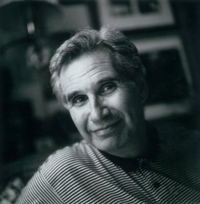
DAVID FINKLE is a New York-based writer and the author of People Tell Me Things and The Man With The Overcoat. His articles and reviews have appeared in many publications, including The New York Times, The Village Voice, The New York Post, The Nation, The New Yorker, New York, Vogue, Harper’s Bazaar and American Theatre. He is currently chief drama critic on The Clyde Fitch Report, the only magazine of arts and politics.
This is a series that David Finkle has written for Manhattan Book Review. Read his other short stories:
Great Dates With Some Late Greats: Archie Horgan’s Story, or Jesus, Meet Elvis
Great Dates With Some Late Greats: Anton Reynolds’s Story, or Mona Lisa, Smile!
Great Dates With Some Late Greats: Doug Reithauyser’s Story, or Babe Ruth Rounds Home